The Kokeshi Aesthetic: Bringing Japanese Softness into Your Creations
History of Kokeshi dolls, why Japanese style and watercolour fit scrapbooking. Coral and mint colour palette, ideas for cards and bookmarks in creative stationery.
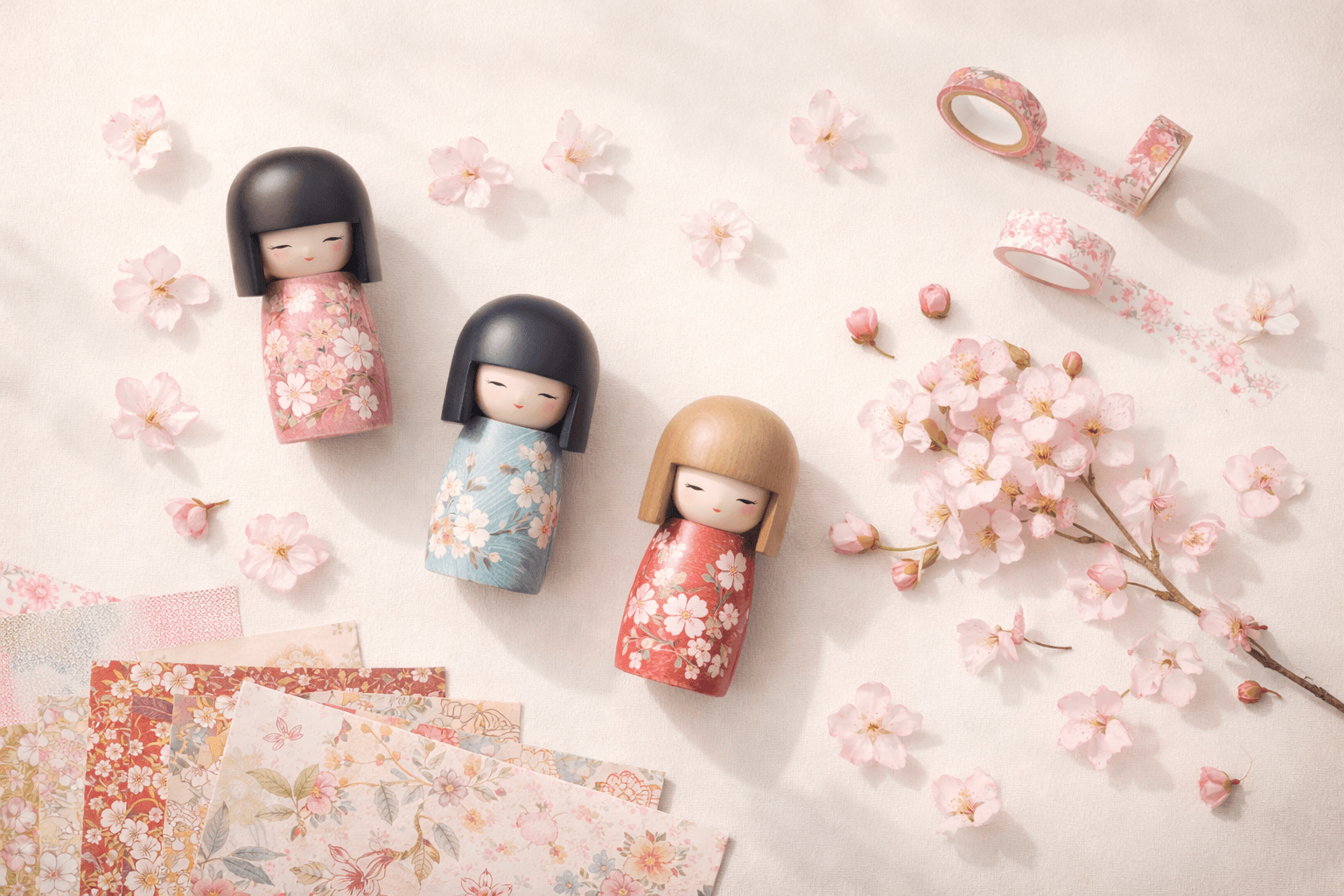
Kokeshi dolls and Japanese style bring a unique softness to your albums and creative stationery. This guide introduces the history of Kokeshi dolls, a watercolour-inspired palette (coral and mint), and ways to weave this traditional design into your cards and bookmarks.
The History of Kokeshi Dolls
Kokeshi (小芥子) are turned wooden dolls that originated in northern Japan in the early 19th century. They were first made by craftspeople in hot-spring towns (onsen) as souvenirs for visitors. Their shape is simple: a round head and a cylindrical body, with no arms or legs, often hand-painted with floral motifs, geometric lines, or minimal faces.
- Origin : Tōhoku region (Japan), craft linked to onsen.
- Shape : round head, cylindrical body, turned on a lathe.
- Decoration : flowers (sakura, chrysanthemums), geometric patterns, clean faces.
- Evolution : from artisan souvenir to a symbol of traditional Japanese design, now widely used in creative stationery and watercolour illustration.
That simplicity and softness make them a perfect theme for scrapbooking and creative stationery: clean lines, gentle colours, Japanese style inspiration without clutter.
Why Kokeshi Work So Well in Scrapbooking
Japanese style Kokeshi and scrapbooking share a focus on balance, the use of empty space, and an appreciation for natural materials. In watercolour or watercolour-style prints, Kokeshi add a touch of softness and tradition without overwhelming the page.
- Balance : round shapes and soft lines that pair well with patterned papers or plain backgrounds.
- Detail : floral and geometric motifs that add depth without clutter.
- Versatility : Kokeshi suit seasonal themes (spring, autumn), “nature” and “zen” layouts, and creative stationery (cards, bookmarks, tags).
By adding Kokeshi or traditional design elements to your projects, you bring in a clear story and an instantly recognisable aesthetic while keeping full freedom in layout.
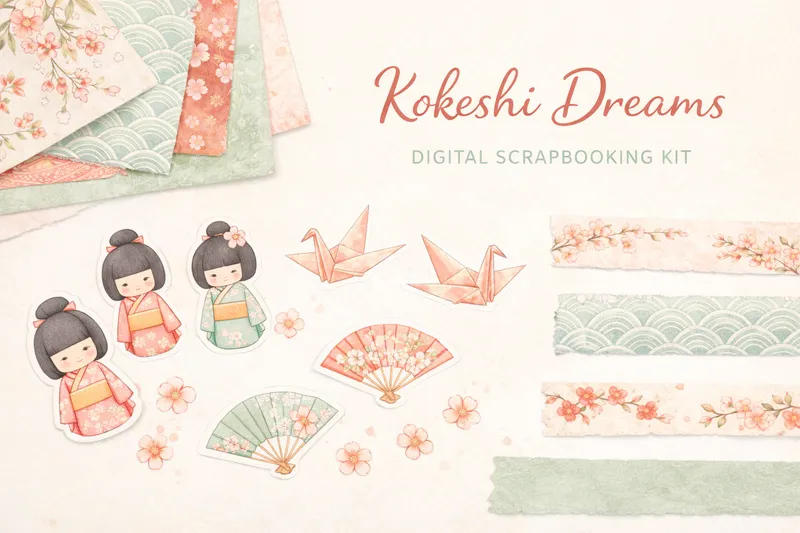
A pack like Kokeshi Dreams is full of Japanese style and watercolour elements: dolls, flowers, patterns, and papers that match the Kokeshi aesthetic and your creative stationery perfectly.
Colour Palette: Coral and Mint
A palette inspired by Japanese style and watercolour works beautifully with Kokeshi: soft, natural, and calming tones.
Why Coral and Mint Work
- Coral (and salmon, peach): gentle warmth, reminiscent of cherry blossoms and soft sunsets. Great for accents, ribbons, and small motifs.
- Mint (and sage green, aqua): freshness, nature, zen. Ideal for backgrounds, foliage, and borders.
- Neutrals : cream, off-white, very soft grey to balance and give traditional design room to breathe.
Combination Ideas
- Mint background + coral accents + Kokeshi or floral watercolour motifs.
- White card with mint border and coral Kokeshi sticker.
- Bookmark : mint strip, small Kokeshi or sakura in coral, simple finish.
In creative stationery, this palette works for greeting cards, bookmarks, and gift tags with a clear Japanese style feel.
Project Ideas: Cards and Bookmarks
A few ways to bring the Kokeshi aesthetic and traditional design into your makes.
Cards
- Greeting card : mint or cream background, one Kokeshi or watercolour floral cluster in the centre, coral ribbon or washi.
- Minimal card : white background, single Kokeshi or Japanese geometric motif, simple text.
- Seasonal card : sakura and Kokeshi for spring; chrysanthemums and coral tones for autumn.
Use digital stickers or printed watercolour elements for a soft, cohesive Japanese style look.
Bookmarks
- Strip bookmark : mint or light coral background, small Kokeshi or watercolour flower, subtle border.
- Bookmark with tassel : strip of scrapbooking paper with Japanese-inspired pattern, Kokeshi or geometric motif, thread or ribbon tassel.
- Tag-style bookmark : tag shape, one Kokeshi or traditional design motif, hole and ribbon at the top.
Creative stationery around Kokeshi gives you useful, beautiful objects: cards, bookmarks, and tags that tell a story and are quick to make.
Conclusion
The Kokeshi aesthetic and Japanese style add softness and a strong identity to your creations. By drawing on the history of Kokeshi dolls, a watercolour-inspired palette (coral and mint), and creative stationery ideas (cards, bookmarks), you bring in a recognisable, calming traditional design. Whether you use a dedicated pack or mix in your own elements, Japanese softness has a place on every page and every card.