The Ultimate Beginner's Guide to Junk Journaling
Discover junk journaling and creative journaling: reuse paper, express your creativity. 5 steps to start as a beginner in scrapbooking with vintage paper and a theme.
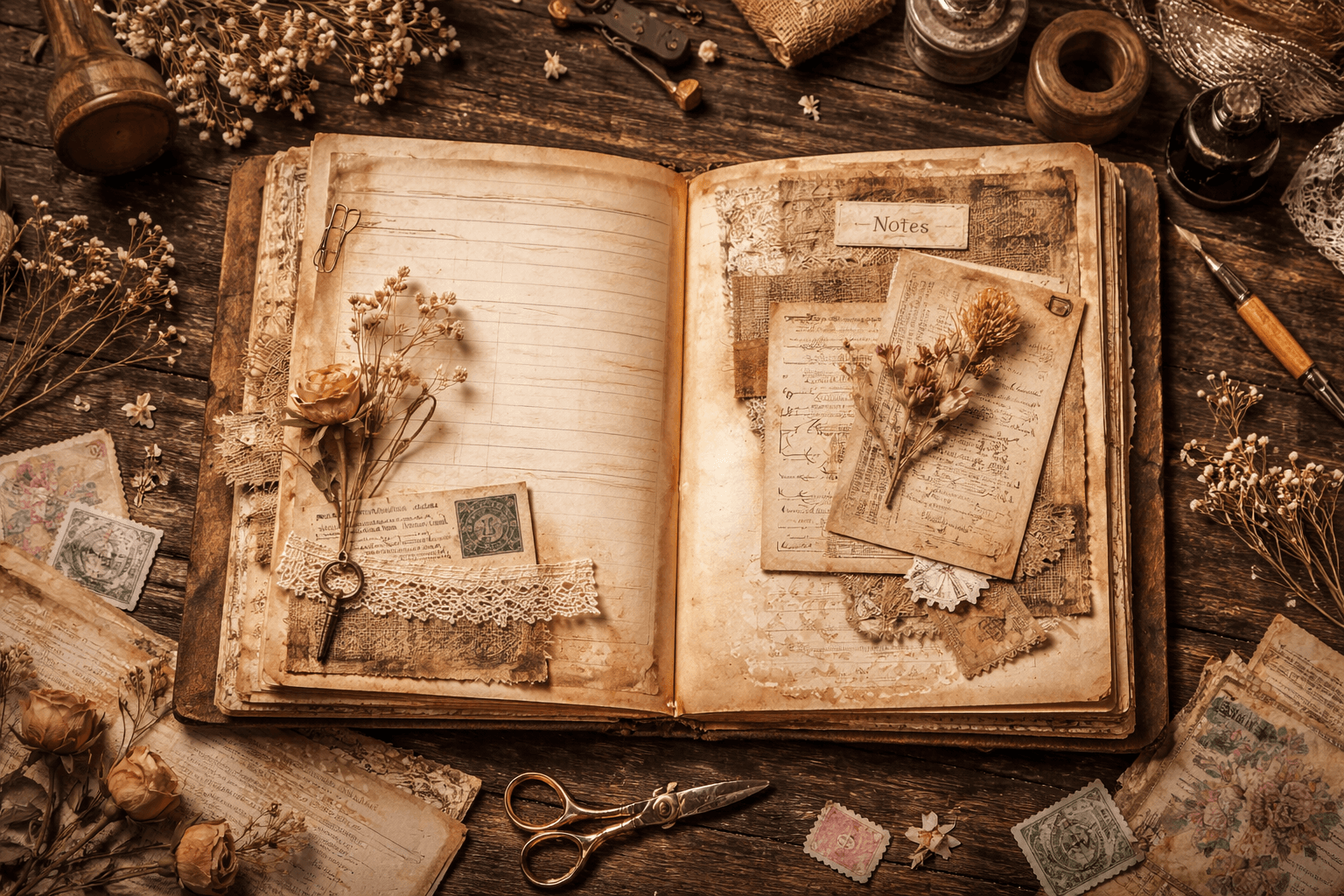
Junk journaling is more than a craft — it’s a gentle way to give paper a second life, tell stories, and create something unique with your own hands. Whether you’re completely new to beginner scrapbooking or already love creative journaling, this guide walks you through everything you need to get started with confidence.
What Is a Junk Journal?
A junk journal is a personalised notebook, often made from reused and recycled papers and materials. The word “junk” isn’t about trash — it’s about creative freedom. You mix vintage paper, old book pages, tickets, fabric scraps, and printed elements to build a journal that feels like you. It’s beginner scrapbooking at its most accessible: no strict rules, just the joy of making and expressing yourself.
- Reusing paper : envelopes, book pages, sheet music, wrapping paper.
- Creative expression : collage, writing, drawing, stamps, stickers.
- One-of-a-kind object : every junk journal is personal and impossible to copy.
Five Steps to Get Started
1. Choose a Theme
A theme keeps your project coherent and makes it easier to pick papers and embellishments. Think about what inspires you: seasons, travel, tea and cakes, nature, vintage, your favourite colours… For beginner scrapbooking, a clear theme simplifies choices and keeps you motivated.
Once you have a theme in mind, jot down a few keywords (e.g. “tea, flowers, pastels”) — they’ll guide your vintage paper and printable elements.
2. Choose Your Papers
Vintage paper and prints are the heart of a junk journal. You can:
- Reuse what you have: old books, sheet music, kraft envelopes, wrapping paper.
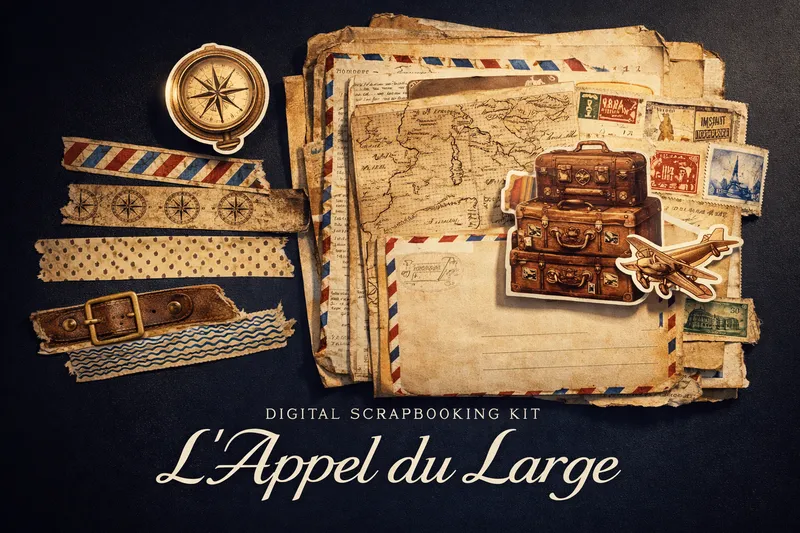
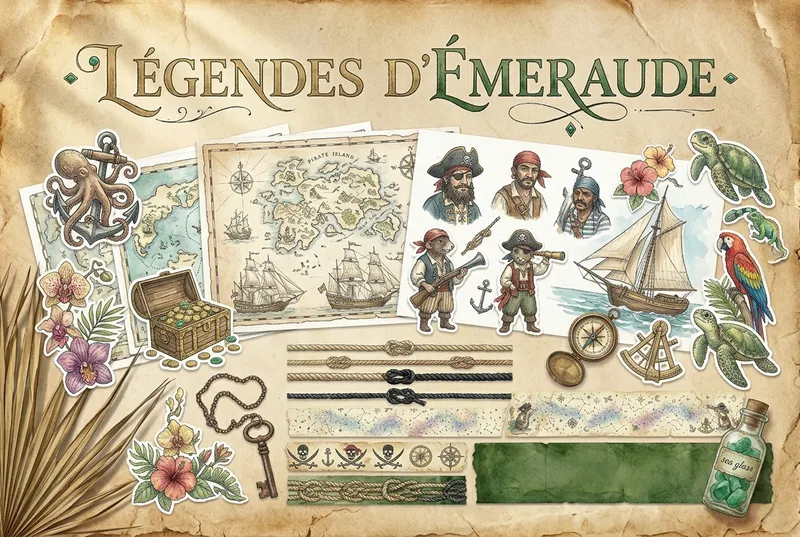
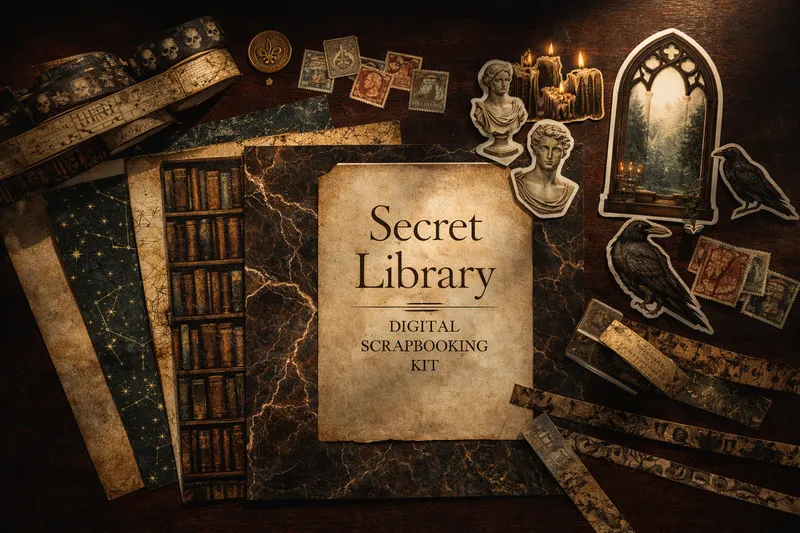
- Use printable paper kits (like our digital packs) for a pro look while staying creative.
- Mix both: recycled and printed papers for a rich, personal creative journal.
Tip: vary weights and textures (smooth, grainy, patterned) to give your junk journal depth.
3. Binding Basics
You don’t need fancy equipment to start. A few simple options:
- Elastic binding : punch holes and thread elastic or ribbon — great for a first journal.
- Hand-stitched : simple pamphlet stitch to hold a signature of pages.
- Rings or spiral : easy if you want to add or remove pages later.
Start simple; you can explore Japanese or Coptic binding once you’re comfortable with the basics of junk journaling.
4. Decorate and Personalise
This is where your creative journal comes alive. A few ideas:
- Glue in tickets, labels, and scraps of vintage paper.
- Add stickers, stamps, ribbons, and washi tape.
- Write quotes, lists, or short notes by hand.
- Create pockets, flaps, and tabs to hold photos or notes.
It’s fine to leave some pages “in progress” — a junk journal evolves over time, and that’s part of its charm.
5. Start Creating and Keep Going
The best way to get better at junk journaling is to practise a little often. Set short sessions (one page, one pocket, one cover) instead of one huge goal. Join online communities, get inspired by other makers, and above all have fun — there’s no “wrong” page in a junk journal.
Tips for Beginners
- Start small : a journal with just a few pages is enough for a first project.
- Collect without guilt : tickets, papers, images — almost anything can be used.
- Mix freely : vintage paper, modern prints, recycled and new work well together.
- Enjoy the process : junk journaling is there to make you feel good, not to add pressure.
Conclusion
Junk journaling and creative journaling are ideal entry points into beginner scrapbooking. By reusing paper and letting your creativity lead, you create a unique object that tells your story. Choosing a theme, lovely papers (vintage or printable), simple binding, and a few decorations is all you need to begin. The most important step is to start — and to enjoy the journey.