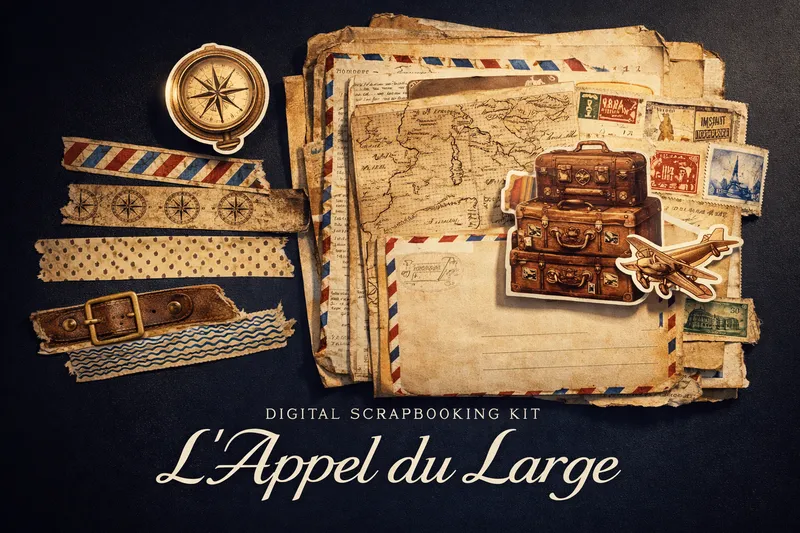
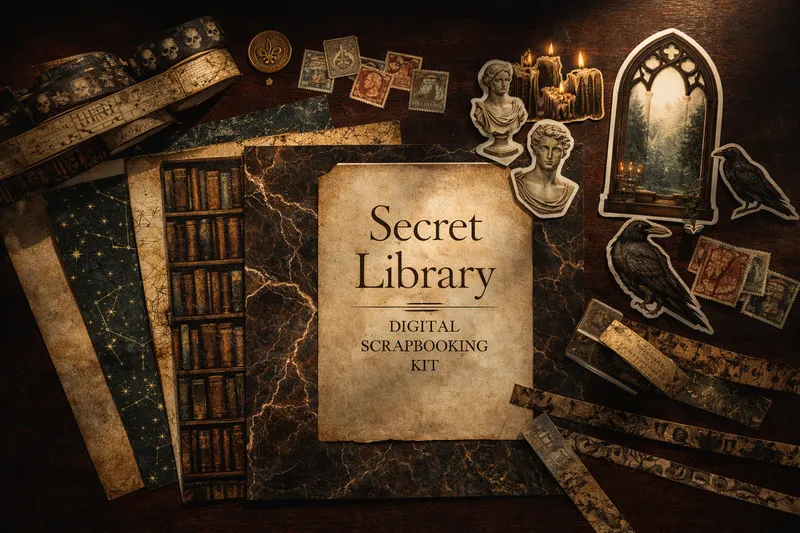
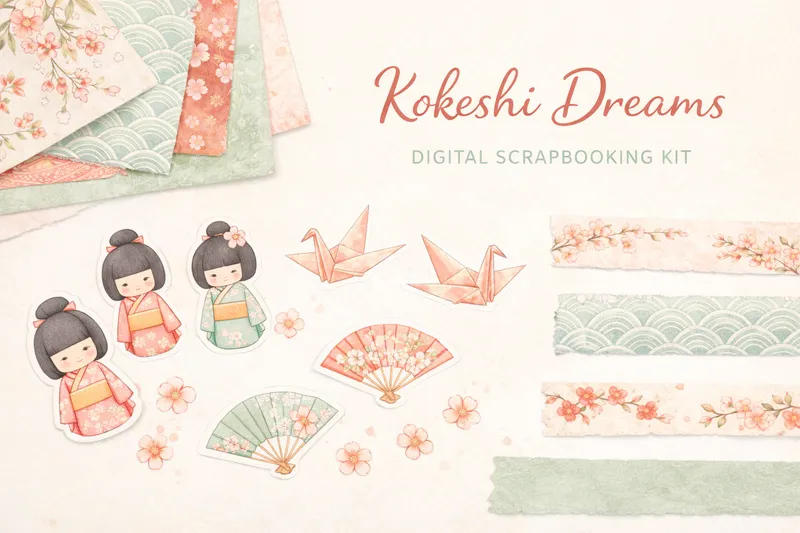
Junk Journal Printables: What to Print and How to Use Them
Learn which junk journal printables are most useful, what to print first, how to combine papers, ephemera, tags and cards, and how to build layered journal pages at home.
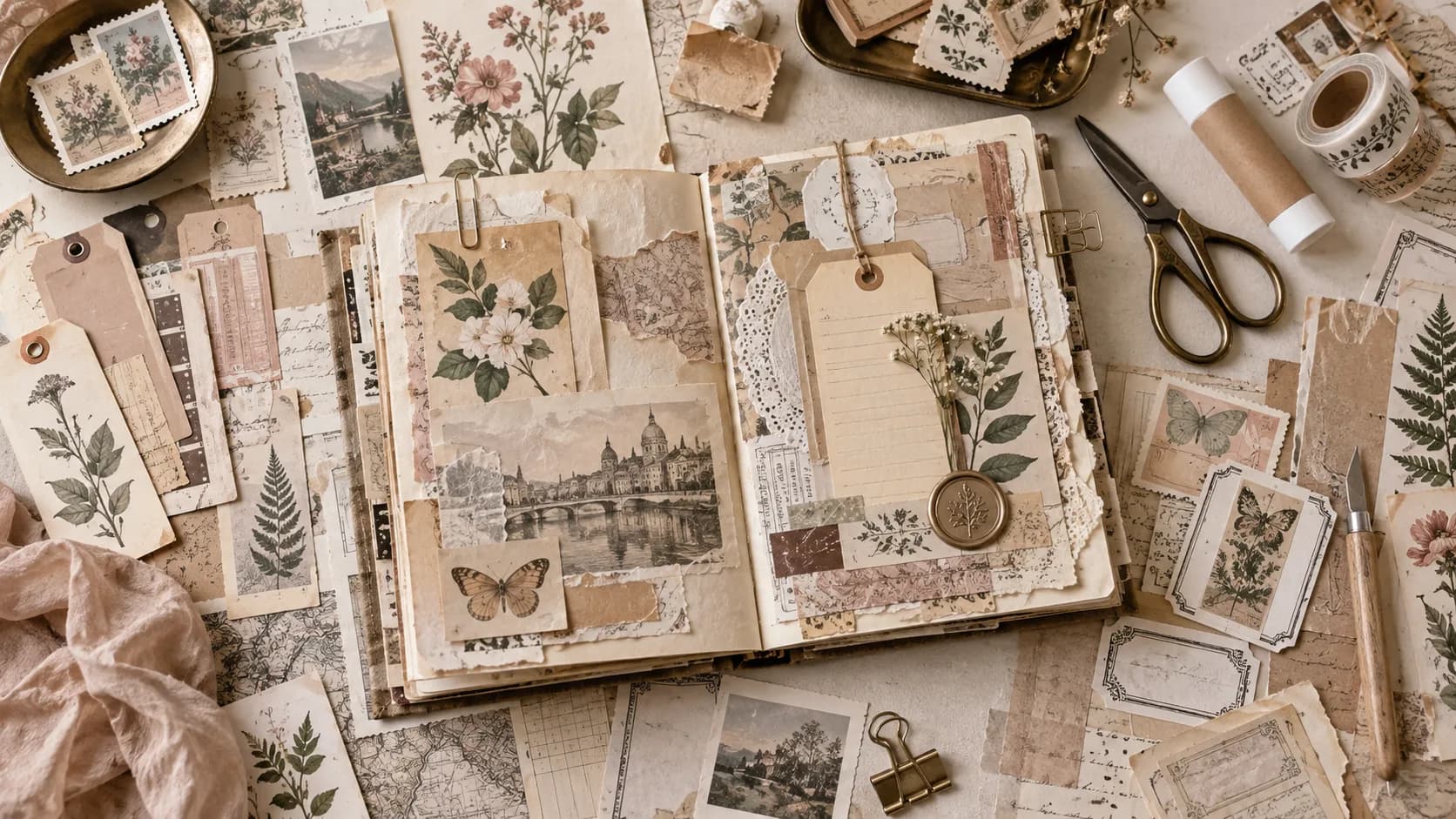
Junk journal printables make it easier to create rich, layered pages without needing a huge stash of physical supplies. Instead of hunting down every tag, label, background paper or decorative scrap one by one, you can print coordinated elements at home and combine them into pages that feel personal, tactile and varied.
The challenge for beginners is rarely a lack of ideas. It is knowing what to print first, what each printable element is for, and how to use everything without turning the page into visual clutter.
This guide explains the practical side of junk journal printables, from choosing the right elements to building pages that feel textured, balanced and lived-in.
You will learn:
- what junk journal printables are,
- which printable elements are most useful,
- what to print first as a beginner,
- how to combine papers, labels, tags and ephemera,
- how to print them cleanly at home,
- and how to use them in real junk journal pages.
If you want to browse ready-made themed kits while reading, explore the junk journal printables collection.
What Are Junk Journal Printables?
Junk journal printables are digital files designed to be printed and used in handmade journal pages. They often include a mix of decorative and practical elements such as:
- background papers,
- tickets,
- labels,
- journaling cards,
- tags,
- stamps,
- pockets,
- tabs,
- collage scraps,
- washi-style strips,
- and printable ephemera.
Unlike standard scrapbooking supplies, junk journal printables are usually built for a more layered, collected and imperfect look. They are meant to feel like found paper fragments, old stationery, personal notes, travel remnants or themed decorative pieces that help tell a story on the page.
That makes them especially useful for people who enjoy tactile crafting but want more flexibility than fixed physical kits can offer.
Why Junk Journal Printables Are So Useful
Printable supplies solve several common junk journaling problems at once.
1. They reduce supply overwhelm
You do not need drawers full of random paper goods before you can begin. One strong printable kit can give you backgrounds, focal points and support elements in a coordinated style.
2. They make repetition easier
If you love one label sheet or one set of tags, you can reprint it when needed instead of “saving” your last copy and never using it.
3. They help pages feel more cohesive
A good printable kit already contains elements that share a palette, theme and texture language. That means your pages look more intentional, even if your physical stash is small.
4. They support both simple and dense pages
You can use just one paper and one label for a clean journal page, or combine many elements into a layered vintage collage.
5. They work beautifully with found materials
Printable pieces pair well with book paper, handwritten notes, envelopes, fabric, receipts, pressed flowers, stamps or packaging scraps.
Kits with labels, cards, paper textures and antique-style details are especially effective when you want pages to feel like collected fragments rather than flat decorations.
What to Print First for a Junk Journal
A common mistake is printing everything at once. A better approach is to print a small working set with clear roles.
Start with these categories:
1. Background papers
These create the base layer of the page. In junk journaling, useful background papers often include:
- old-paper textures,
- ledger styles,
- faded florals,
- map-like surfaces,
- distressed patterns,
- writing textures,
- muted decorative prints.
Print 2-4 papers first, not the entire kit.
2. Labels and tickets
These are some of the most useful printable elements because they help structure the page. Use them to:
- add short text,
- create clusters,
- build visual rhythm,
- support a focal image,
- or break up empty space.
3. Journaling cards and note cards
These are practical anchor pieces. They give you a ready-made place for:
- dates,
- quotes,
- memories,
- prompts,
- lists,
- or short handwritten notes.
4. Tags
Tags add both shape and function. They can be tucked into pockets, tied with ribbon, layered under photos or used as mini journaling surfaces.
5. A small set of decorative ephemera
This can include stamps, seals, florals, frames, icons or collage scraps. These details help the page feel finished, but they should support the composition rather than overwhelm it.
If you want a more focused breakdown of decorative pieces specifically, read Printable Ephemera for Junk Journals.
The Most Useful Types of Junk Journal Printables
Not every printable plays the same role. Thinking in functions makes page-building easier.
Background printables
These are your foundations. They set the mood before any other element is added.
Use them for:
- full page backgrounds,
- folded inserts,
- mini envelopes,
- pockets,
- torn collage layers,
- or backing mats for smaller pieces.
Structural printables
These create order and usable writing space.
Examples:
- journaling cards,
- labels,
- date strips,
- tabs,
- index cards,
- mini frames.
These are excellent when you want a page to remain readable and not just decorative.
Decorative printables
These create atmosphere and theme.
Examples:
- florals,
- celestial details,
- stamps,
- seals,
- vintage marks,
- illustrations,
- themed icons,
- ornamental clusters.
These help define the personality of the page.
Interactive printables
These add movement or functionality.
Examples:
- pockets,
- fold-outs,
- tuck spots,
- mini booklets,
- tags,
- flaps,
- printable envelopes.
These are especially useful when you want your junk journal to feel exploratory and layered.
Travel-inspired kits work well for interactive journal layouts because tickets, labels, note cards and paper scraps naturally lend themselves to pockets, tucked pieces and story-driven pages.
How to Use Junk Journal Printables on a Real Page
The easiest way to use printable elements well is to build the page in layers, with each layer having a job.
Step 1: Start with one background
Choose one dominant paper. If you want more texture, add one torn strip or one smaller secondary paper. Avoid beginning with five patterns at once.
Step 2: Add one anchor element
This could be:
- a journaling card,
- a large tag,
- a photo,
- a cluster,
- or a note block.
The anchor gives the page a center of gravity.
Step 3: Add structural support
Layer in 2-4 practical pieces such as:
- labels,
- tabs,
- small cards,
- or ticket strips.
These make the composition feel intentional and give you places for writing.
Step 4: Add decorative atmosphere
Now bring in small ephemera like:
- florals,
- stamps,
- small icons,
- seals,
- torn fragments,
- or washi-style strips.
This is where the page gains personality.
Step 5: Add writing or meaning
Even one short sentence, a date or a note can turn a decorative page into a memory page.
Step 6: Stop before the page loses clarity
Junk journals are layered, but they still need hierarchy. If everything is loud, nothing stands out.
5 Beginner-Friendly Ways to Use Junk Journal Printables
If you want immediate ideas, start with these.
1. A simple layered writing page
Use:
- one background paper,
- one journaling card,
- two small labels,
- one decorative accent.
Best for: daily journaling or memory keeping.
2. A tuck spot page
Create a pocket from printable paper and tuck in:
- two tags,
- one note card,
- one small ticket.
Best for: interactive pages.
3. A vintage collage spread
Use:
- two torn paper layers,
- one focal card,
- several small labels,
- stamp-like ephemera,
- and one handwritten quote.
Best for: moody, collected visual storytelling.
4. A themed seasonal page
Choose a consistent kit theme such as botanical, celestial, cottagecore or travel, then keep every element inside that universe.
Best for: cohesive spreads.
5. A photo memory page
Use a printed photo as the focal point, then support it with labels, cards and small ephemera instead of burying it under too many decorations.
Best for: preserving meaningful moments.
Theme-led kits are especially helpful when you want even a simple page to feel immersive and expressive.
How to Print Junk Journal Printables at Home
Good printing choices make a visible difference.
Recommended baseline settings
- Print quality: High / Best
- Scale: 100%
- Match the paper profile to your actual paper
- Use original files, not screenshots
- Prefer 300 DPI source files
For the full printing workflow, read How to Print Digital Scrapbook Paper at Home.
Paper suggestions by use
For background pages
Use matte paper around 100-120 gsm if you want easier layering and less bulk.
For tags, labels and ephemera
Use matte or satin paper around 120-160 gsm for stronger handling and cleaner cuts.
For journaling cards or pockets
Use heavier paper if you want more structure, especially for fold-outs or interactive pieces.
Test before printing a full batch
Before printing a large set, test one page and check:
- darkness,
- readability of text,
- contrast,
- cuttability,
- and how the paper feels once folded or layered.
Common Mistakes with Junk Journal Printables
Printing too much too early
Fix: print a small working batch first.
Using too many focal pieces
Fix: one page, one main visual anchor.
Choosing only decorative items
Fix: include structural pieces like labels or cards so the page has function.
No contrast in scale
Fix: mix one large piece, a few medium pieces and several small accents.
No room for writing
Fix: reserve at least one usable surface for text, even if the note is short.
Overmatching everything
Fix: coordination is good, but pages feel more alive when one or two found materials break the perfection.
How to Build a Small Personal Printable Library
You do not need hundreds of files. Build a small, reusable printable library with intention.
Try organizing by function:
- Background papers
- Labels
- Tags
- Journaling cards
- Pockets and envelopes
- Decorative ephemera
- Seasonal elements
- Theme-based kits
This makes it much easier to pull together pages quickly.
If you enjoy curated themes, explore the broader printable scrapbook kits collection and save the styles you would happily use more than once.
Which Themes Work Best for Junk Journal Printables?
Many themes can work, but some are especially effective because they naturally support layering.
Vintage
Ideal for:
- labels,
- tickets,
- old paper,
- writing textures,
- travel remnants,
- antique-style collage.
Botanical or cottagecore
Ideal for:
- florals,
- soft textures,
- note cards,
- natural layering,
- seasonal memory pages.
Celestial
Ideal for:
- dreamy journaling,
- night spreads,
- mood boards,
- mystical or poetic compositions.
Travel
Ideal for:
- routes,
- memories,
- postcards,
- itinerary notes,
- collected-story pages.
Different themes support different emotional tones, but the same printable logic still applies: background, anchor, support, meaning.
Junk Journal Printables vs Printable Ephemera
These terms overlap, but they are not identical.
Junk journal printables is the broader category. It can include:
- full-page papers,
- cards,
- labels,
- pockets,
- tags,
- decorative elements,
- and printable ephemera.
Printable ephemera is more specific. It usually refers to the smaller decorative or document-like pieces used for layering, such as:
- tickets,
- stamps,
- labels,
- tags,
- seals,
- mini notes,
- small decorative fragments.
So if you are searching for “junk journal printables,” you are often looking for the full toolkit, not only the embellishments.
Beginner FAQ
Conclusion: Print Less, Layer Better, Tell More
The best junk journal printables are not just pretty files. They are flexible building blocks for storytelling, layering and memory keeping.
Start by printing a small set with clear roles: one or two backgrounds, a few labels, one card, a couple of tags and a handful of decorative pieces. Use them to create one complete page, then notice what you actually reach for most.
That rhythm will teach you more than printing an entire stash at once.
When you are ready, explore Pixel Scrap’s junk journal printables collection and build pages that feel textured, expressive and unmistakably your own.